The Ernst Hadorn Foundation aims to promote Life Science Research in the University of Zurich.
Scientific Legacy
The Foundation honors researchers and scientific leaders whose work has shaped molecular biology, neuroscience, and life science research at the University of Zurich and beyond.
Scientific Legacy
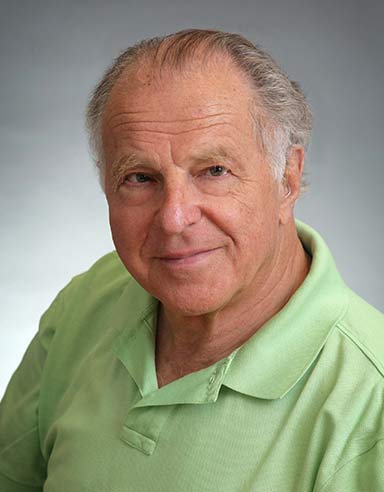
Charles Weissmann
Charles Weissmann is a molecular geneticist best known for being the first to clone the genes for interferon, a protein released in response to viral infection that can now be synthesised on an industrial scale for use as a medicine. He went on to research a number of different disease-causing agents, or pathogens.
He was the first to discover and document the life cycle of bacteriophages, viruses that infect bacteria, and subsequently investigated a number of pathogens, including those responsible for tuberculosis and malaria. He has made seminal contributions to the understanding of diseases caused by the small infectious protein particles known as prions, such as bovine spongiform encephalopathy, more commonly known as mad cow disease.
Charles Weissmann has won numerous awards during his research career, including the 1995 Robert Koch Gold Medal. He is a Foreign Associate Member of the US National Academy of Sciences, a Fellow of the Royal Society, and holds several honorary doctorates from universities around the world. He co-founded the leading biotech company Biogen and served on the Board of Directors of Roche, where he was instrumental in the acquisition of Genentech.
Board Member
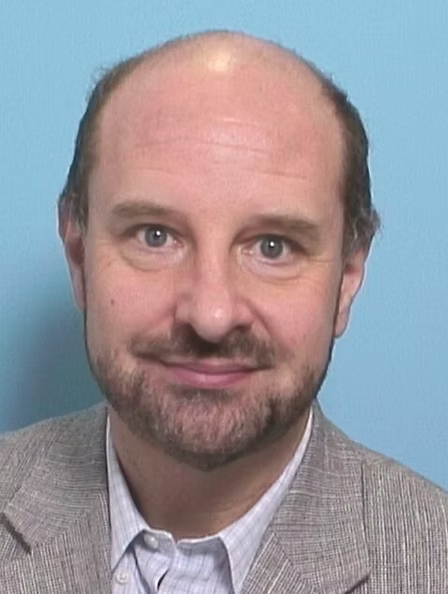
Richard Weissmann
Richard Weissmann directs his own physiotherapy practice in Bülach, is co-founder and president of the Swiss Dry Needling Association (DVS), and is also co-founder and head of faculty of the David G. Simons Academy (DGSA).
He graduated in 1992 with a state diploma in Physical Therapy in Schaffhausen, Switzerland. After that he undertook further study and training in orthopedic manual therapy. He acquired the fundamental and practical experience for the treatment of myofascial pain syndromes during the six years that he worked with Dr. Beat Dejung, MD, a pioneer in Manual Trigger Point Therapy in Switzerland. During this time, he also had the opportunity to gain experience with Dr. David Simons, Dr. Peter Baldry and Dr. Chann Gunn.
In the outpatient department, he treats mainly patients with neuro-musculo-skeletal dysfunctions in his clinic in Bülach/Zurich. Since 1993, he has regularly trained physical therapists and physicians in Trigger Point Therapy and Dry Needling. He headed the Society for Myofascial Trigger Point Therapy (IMTT) in Switzerland as founding president from 1994 to 2003. Richard Weissmann played a key role in the development of dry needling as a form of musculoskeletal therapy and in establishing this technique in Switzerland and Europe. He has been invited internationally as a speaker for congresses and workshops, is the author of several articles and book chapters, and co-author of the books “Trigger Point Therapy” and “Myofasziale Schmerzen und Triggerpunkte”.
He has been a member of the board of the Ernst Hadorn Foundation since 2022.
Scientific Leadership
Adriano Aguzzi
Adriano Aguzzi directs the Institute of Neuropathology at the University of Zurich. His research focuses on prions, exploring how they damage brain cells, why they accumulate in lymphoid organs, and how they reach the brain after entering the body from peripheral sites.
Prof. Aguzzi has provided the first evidence that prions can be halted in vivo with therapeutic antibodies and that epitope specificity is crucial to the action of such antibodies. His laboratory discovered the prion protein receptor. He is the Director of the MD-PhD program at the University of Zurich, Past President of the Swiss Society of Neuropathology, and Founding Director of the Swiss National Reference Center for Prion Diseases.
Prof. Aguzzi has patented diagnostic and therapeutic methods in the prion field, advised the British, Italian, and Swiss governments on prion diseases, serves on the editorial board of the journal Science, and is Editor-in-Chief of the Swiss Medical Weekly. Among other honors, he has won the Ernst-Jung, Marcel-Benoist, Baillet-Latour, and Robert-Koch Prizes as well as the Gold Medal of the European Molecular Biology Organization (EMBO), and has received three doctorates honoris causa.
Board And Administration
Board Member
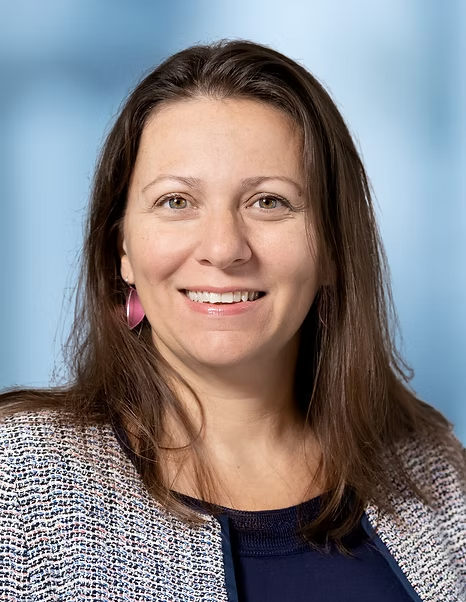
Magdalini Polymenidou
Magdalini Polymenidou is Associate Professor of Biomedicine at the Department of Quantitative Biomedicine of the University of Zurich. She is an expert on protein aggregation, prions and prion-like phenomena, as well as RNA-binding protein biology.
She joined UZH as an Assistant Professor in 2013 and since then has led a research team focusing on the molecular mechanisms of ALS and FTD. The team investigates the formation and properties of the physiological and pathological states of TDP-43, FUS and the dipeptide repeat proteins, combining structural and biochemical analyses with cellular assays and animal models.
Originally trained as a pharmacist at Aristotle University of Thessaloniki, she completed her PhD on prion diseases in the laboratory of Adriano Aguzzi at the University Hospital of Zurich. As a postdoctoral fellow in the group of Don Cleveland at the University of California in San Diego, she used genome-wide approaches to understand the function of TDP-43 and FUS.
Among other honors, she was awarded the ERC Consolidator Grant in 2022, the Franco Regli Prize in 2019, the EMBO Young Investigator Award in 2018, the Georg-Friedrich Götz Prize in 2015, the SNSF Professorship in 2013, the HFSP Career Development Award in 2013, and the NIH Pathway to Independence Award in 2011. She is one of the 2022 Novartis Institute for Biological Research Global Scholars.
Administrator
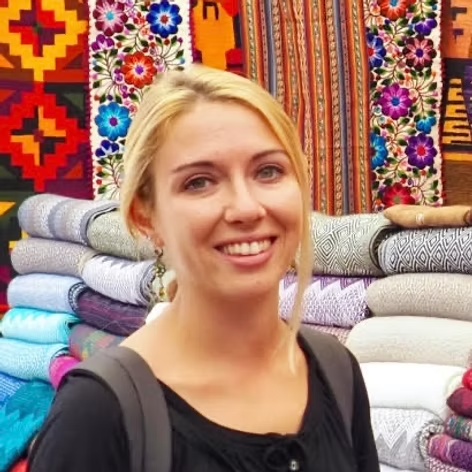
Elena De Cecco
Elena De Cecco is Senior Scientist in the laboratory of Prof. Aguzzi at the University of Zurich. She earned her PhD in Functional and Structural Genomics from the International School for Advanced Studies in Trieste, where she began her work on prions under the guidance of Prof. Giuseppe Legname.
After moving to UZH, she specialized in large-scale CRISPR-based forward genetics to uncover novel modifiers of neurodegenerative diseases that may serve as therapeutic targets. Her current research focuses on the intercellular spread of infectious prions and the pathological aggregation of synuclein. She has received multiple research grants, including the FreeNovation Fellowship and the Synapsis Career Development Award.